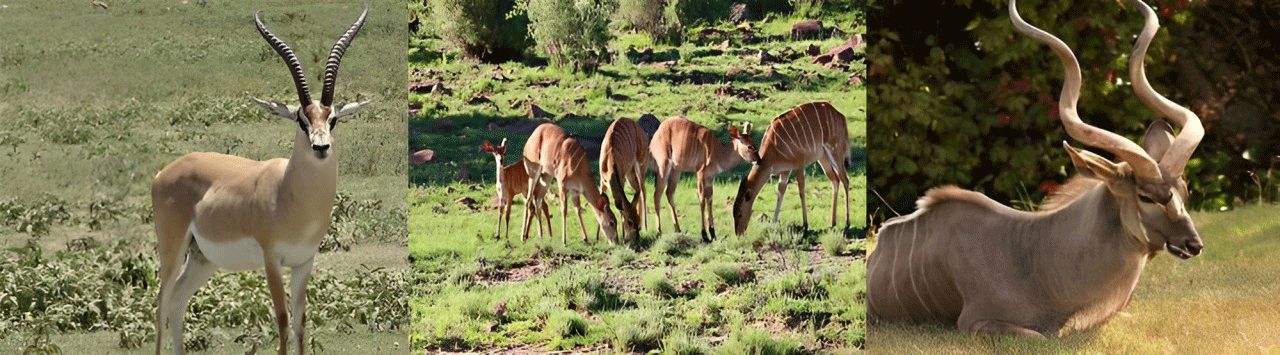
Hunting Activities
History of Hunting in Mozambique
The first inhabitants of Mozambique were the San people, known as hunters and gatherers.
At the beginning of the 16th century, attracted by the natural resources, the Portuguese began trading ivory between the Zambezi and Limpopo rivers. During the 17th and 18th centuries, large numbers of elephants were hunted to supply the markets in Asia and Europe.
During the 19th and 20th centuries, European explorers hunted in Mozambique for food, scientific research and sport. Between 1940 and 1960, Marromeu became known for commercial hunting and meat production (Biofund Library).
In the 1960s, commercial hunting was banned, alongside the establishment of several conservation areas, including national parks, reserves, and hunting concessions. Hunting activities subsequently became primarily focused on sport and tourism (Biofund Library).
After independence, the civil war significantly affected wildlife populations. After 1992, efforts began to restore animal populations, habitats, and conservation infrastructure (ANAC).

Hunting in Mozambique
Hunting activities are regulated to ensure the sustainable use of wildlife resources and strengthen their protection and conservation.
The Hunting Regulations establish the instruments and methods permitted for hunting, while certain weapons and methods are prohibited or subject to legal restrictions.
The use of wildlife in Mozambique comprises four main forms:
- Sport hunting;
- Commercial hunting;
- Hunting for personal consumption;
- Community hunting.
Hunting Season
Hunting wildlife species is subject to licences, quotas and seasons established by law.
Game species are classified, among other categories, as small game and big game, in accordance with the Hunting Regulations.
Protected species and certain categories of animals are subject to hunting restrictions or bans under wildlife conservation regulations.
| No. | Common name | Scientific name |
|---|---|---|
| 01 | Abetarda | Otis tarda |
| 02 | Codorniz | Coturnix coturnix |
| 03 | Francolino | Francolinus francolinus |
| 04 | Galinha-do-mato | Numida meleagris |
| 05 | Patos | Anas platyrhynchos |
| 06 | Pombo | Culumba livia |
| 07 | Perdiz | Rhynchotus rufescens |
| 08 | Rola | Streptopelia turtur |

Other Game Species
Below are some of the main wildlife species found in Mozambique.
| No. | Common name | Scientific name |
|---|---|---|
| 01 | Blue Duiker | Cephalophus monticola |
| 02 | Common Duiker | Sylvicapra grimmia |
| 03 | Suni | Neotragus moschatus |
| 04 | Red Duiker | Cephalophus natalensis |
| 05 | Southern Reedbuck | Redunca arundinum |
| 06 | Steenbok | Raphicerus campestris |
| 07 | Steenbok Grisalho | Raphicerus sharpei |
| 08 | Blue Wildebeest | Connochaetes taurinus |
| 09 | Crocodile | Crocodylus niloticus |
| 10 | Greater Kudu | Tragelaphus strepsiceros |
| 11 | Eland | Taurotragus oryx livingstonei |
| 12 | Warthog | Phacochoerus africanus |
| 13 | Chobe Bushbuck | Tragelaphus ornatus |
| 14 | Lichtenstein’s Hartebeest | Alcelaphus buselaphus |
| 15 | Spotted Hyena | Crocuta crocuta |
| 16 | Bushbuck | Tragelaphus scriptus |
| 17 | Impala | Aepycero melampus |
| 18 | Waterbuck | Kobus ellipsiprymnus |
| 19 | Nyala | Tragelaphus angasi |
| 20 | Yellow Baboon | Papio cynocephalus |
| 21 | Baboon | Papio cynocephalus sp. |
| 22 | Springhare | Pedetes capensis |
| 23 | Red Duiker | Cephalophus natalensis |
| 24 | Oribi | Ourebia ourebi |
| 25 | Sable Antelope | Hippotragus niger |
| 26 | Bushpig | Potamochoerus larvatus |
| 27 | Porcupine | Hystrix africaeaustralis |
| 28 | Zebra | Equus burchelli |